The Superpower Blinks
After April ceasefire, Trump faces his final determination: will striking Iran's infrastructure, or eliminating its Supreme Leader, deliver the capitulation he seeks—or forge a more dangerous regime?

The good news is that Israel has so far intercepted every Iranian ballistic missile.
The initial attack was performative, designed to defy Israel's new Rules of Engagement vis-à-vis Hezbollah in Lebanon and to claim escalation dominance.
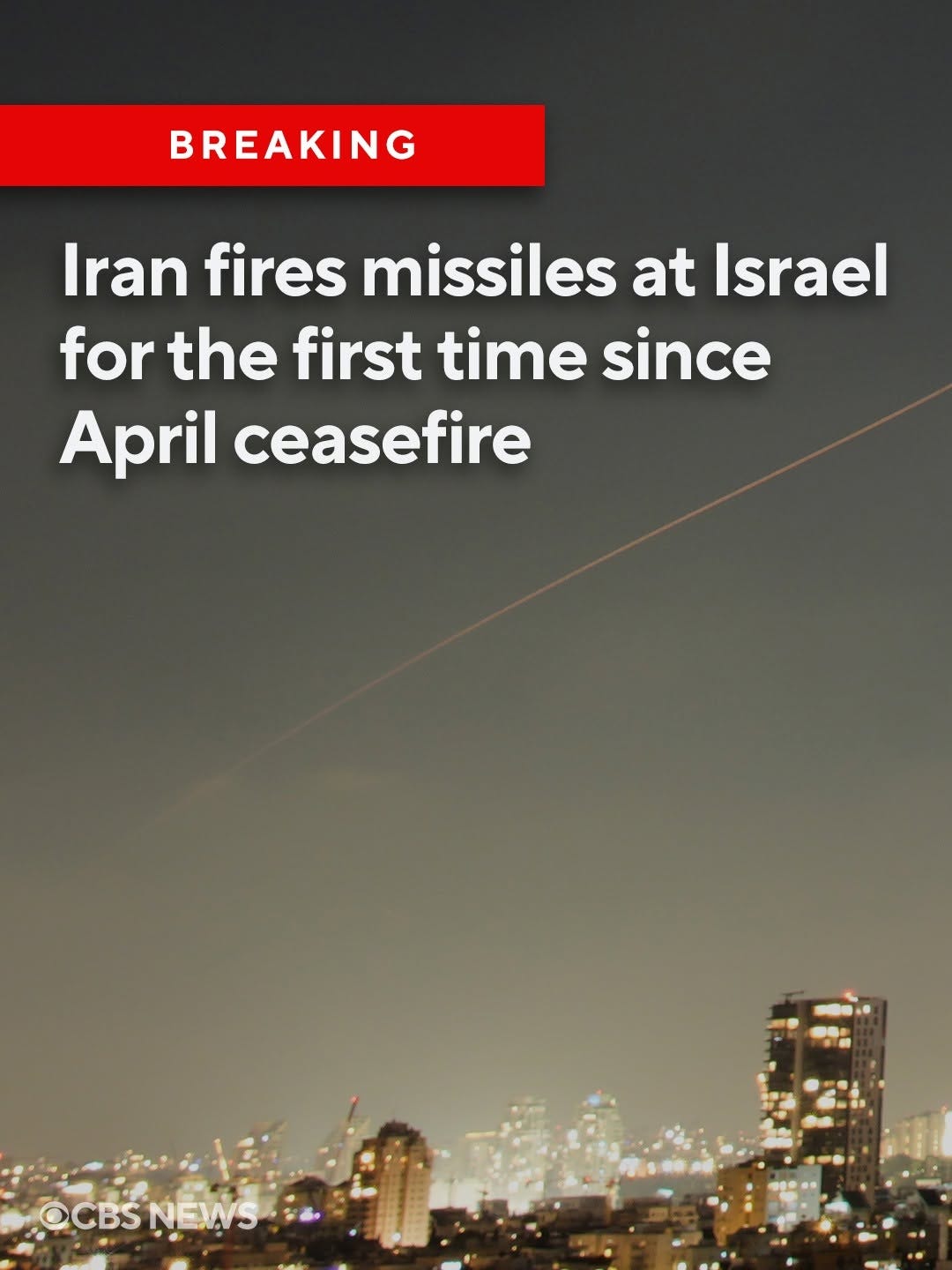
The bad news is that Israel's national security demands retaliation.
And the extent of that depends on whether Trump authorises Netanyahu to open a third war with Iran. Tehran's calculation is that Washington is unwilling to enter a broader conflict and that Israel will be limited to a performative response. Trump's legacy is at stake. In the battle of wills, Tehran argues, Trump lacks the needed resolve.
Should Trump escalate and allow Israel to strike Iran's energy infrastructure, the consequences would be apocalyptic for the region.
Then Iran will eventually retaliate by targeting the power plants of US Arab allies in the Persian Gulf. The six Persian Gulf Arab states depend heavily (above 50% dependence!) on energy-intensive desalination for their drinking water. A catastrophe will unfold.
The question is whether striking Iran’s vital infrastructure, or eliminating its Supreme Leader, will produce a more aggressive regime or deliver the capitulation Trump seeks. The answer will determine whether Trump gives Netanyahu a green light or a red one.
This brings also a strategic dilemma for the World's Superpower: Imagine Trump restraining Netanyahu, refusing to authorise further strikes on Iran. Iran's power projection succeeds. Tehran has levelled its regional standing with Washington. (Could this new equilibrium finally break the impasse in US-Iran talks?)
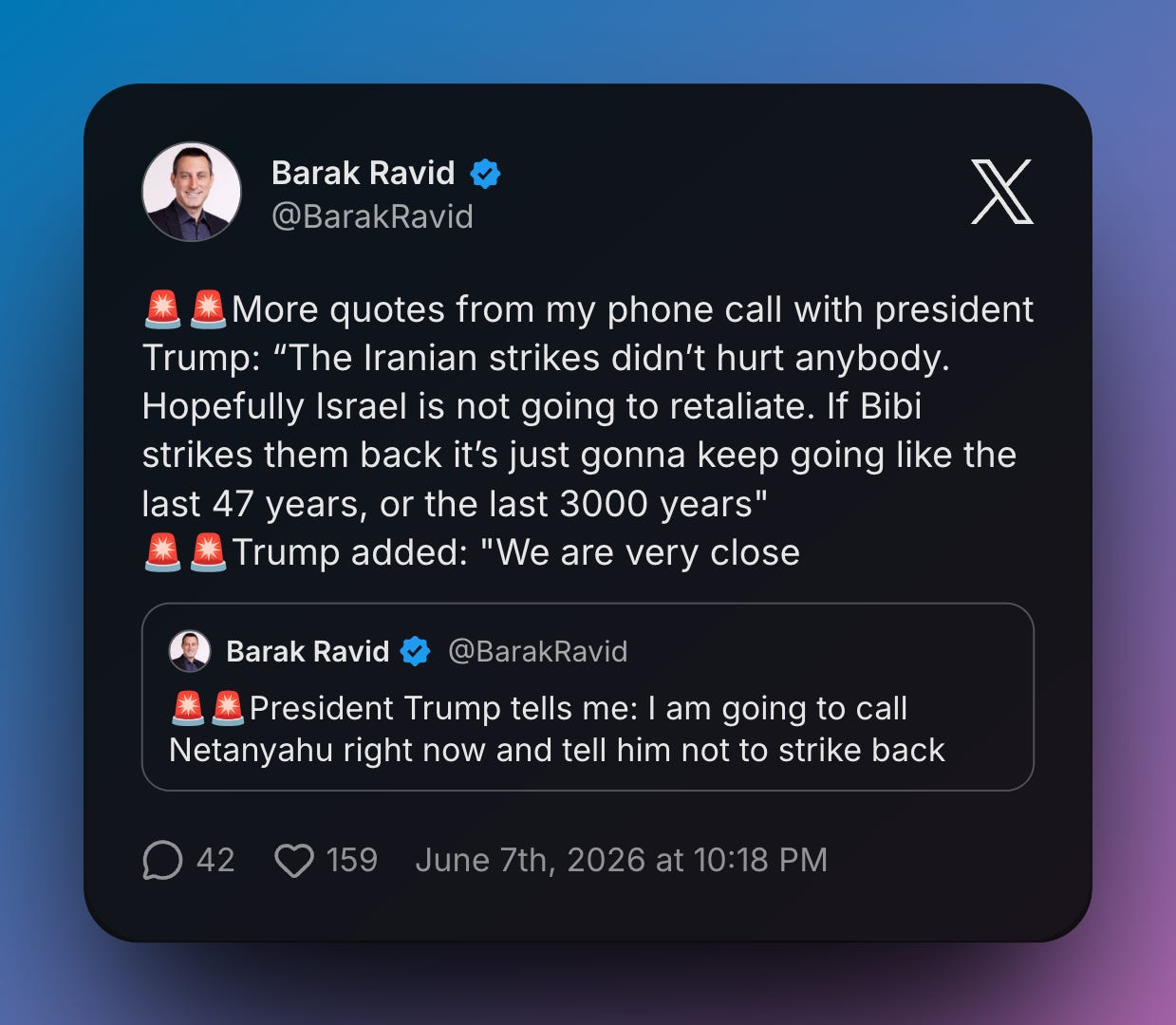
But Israel's national security would then suffer consequences comparable to those of October 7 terrorist attack by Hamas. Or worse. Israeli deterrence would face a challenge without historical precedent.
I don't think Israel can afford being beaten by Iran and restrained by Trump.
Therefore, Netanyahu has no alternative but to retaliate in a way that tears up the rules of engagement Tehran dictated and Washington accepted on Israel's behalf. (I guess targeting the new Supreme Leader, Mojtaba Khamenei, would be one of Israeli options.)
Even if Israel succeeds in eliminating Mojtaba Khamenei, should Tehran survive the third confrontation again, the consequence will further cement Iran's geostrategic position in the region and probably beyond.
The question is whether striking Iran's vital infrastructure, or eliminating its Supreme Leader, will produce a more aggressive regime or deliver the capitulation Trump seeks. The answer will determine whether Trump gives Netanyahu a green light or a red one.
In an ideal world, the UN Security Council would urge the players toward a diplomatic solution for peace. In the real world, the balance of power talks and missiles dictates. And the innocent will pay the price, as they always do. ▣
Addendum (8 June at 07:49 in The Hague):
With what unfolded yesterday (check my post ↑), Iran made a bold move to establish a new deterrence equation.
Iran is betting on two vulnerabilities: Trump’s leadership deficit, and the Pentagon-Mossad fracture, deepened by Israeli espionage operations targeting American officials.
Tehran now claims Beirut and de facto Lebanon, as its sovereign territory: to strike Beirut is to strike Iran, is the message.
This means that even if Trump succeeds in pushing Israel towards a ceasefire, Iran’s regional reach could extend well beyond its borders into other parts of Western Asia.
The post-War ambitions of Iran is to emerge as the fifth global power (US+EU–Iran–Russia+China), or as a consequential Hinge Power in the new world somewhere between the interrsts of the US and its allies and China and its partners.
The bitter irony is that neither US strategic interests nor Israeli security concerns can tolerate such a balance of power in Iran’s favour.
Yet, maybe here lies an opening for diplomacy: this bold gambit could shatter the diplomatic deadlock, and from that wreckage, real diplomacy might yet emerge, if Washington dares to reconsider Iran’s geopolitical weight in the region’s future security architecture.
But even if the Islamic Regime emerges as a geopolitical force—co-authoring the very rules of engagement—its strategic foundations will remain unstable, hollow at the core, so long as it refuses to make lasting peace with its own people and pursue genuine national reconciliation with Iranians.